

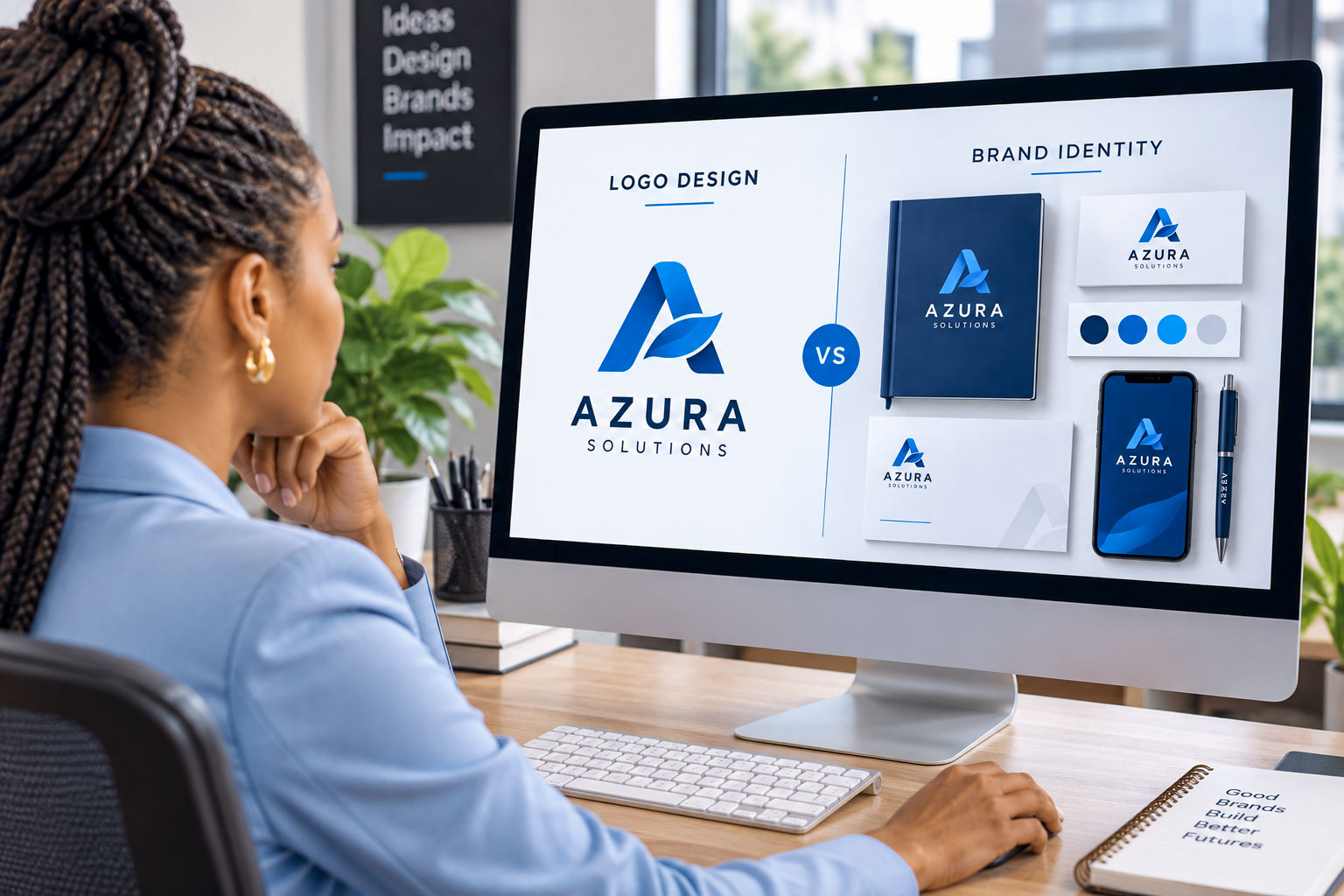
Brand Identity vs Logo Design: What’s the Difference and Why Does It Matter?
When starting a business or refreshing an existing one, one of the first things many companies think about is getting a logo.
A logo is important, but it is only one part of how people recognize and experience a business.
Your colours, typography, imagery, website, social media and marketing materials all contribute to how your business is presented.
Understanding brand identity vs logo design helps you know what your business actually needs and where each fits into building a consistent brand.
What Is a Logo?
A logo is a visual mark used to identify a business, organization, product or service.
It may consist of a name, symbol, icon, initials or a combination of these elements. Think of the Nike swoosh, Apple’s symbol or Coca-Cola’s distinctive lettering.
A good logo should be recognizable, appropriate for the business, easy to use at different sizes and versatile enough to work across digital and physical applications or businesses interested in understanding the principles behind an effective logo, Canva’s guide to logo design also covers areas such as typography, colour, scalability, simplicity and visual recognition.
But a logo cannot communicate everything about a business on its own.
That is where brand identity comes in.
What Is Brand Identity?
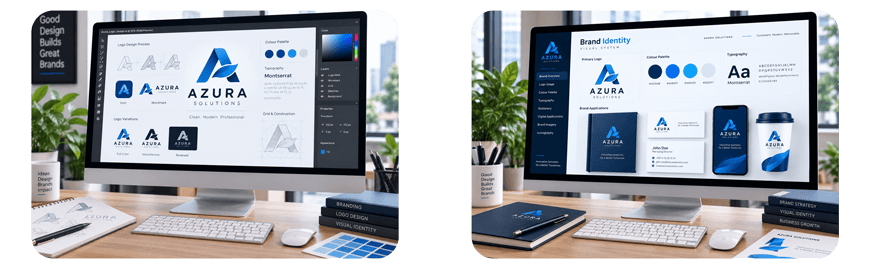
Brand identity is the broader visual system a business uses to present itself consistently.
The logo is part of that system, alongside elements such as:
- Brand colours
- Typography
- Photography and imagery
- Icons and graphic elements
- Patterns and supporting graphics
- Layout and design style
- Brand guidelines
Together, these elements create a recognizable visual language that can be applied consistently wherever customers interact with the business. Understanding brand identity vs logo design starts with recognizing that a logo is one element of a much broader visual system.
Brand Identity vs Logo Design: A Simple Example
Imagine a new coffee company called Morning Bean.
The company creates a circular logo featuring a coffee bean. That is logo design.
Now it chooses warm brown and cream colours, specific fonts, a photography style, packaging patterns and rules for how everything should appear across coffee cups, menus, uniforms, social media, signage and its website.
That is brand identity.
Put simply:
The logo identifies the business.
The brand identity creates the visual world around it.
Why Does Brand Identity Matter?
The value of brand identity vs logo design becomes clearer when you consider how customers experience a business across different touchpoints.
1. Recognition
Consistent use of colours, typography, imagery and graphic elements makes a business easier to recognize over time.
2. Consistency
A defined identity helps ensure your website, social media, advertisements, documents and physical materials all look like they belong to the same business.
3. Personality
Visual choices also communicate character. A technology company may require a very different identity from a children’s brand, restaurant or luxury fashion company.
Good brand identity helps translate that personality into a visual language customers can understand.
What Does a Brand Identity Usually Include?
The exact deliverables depend on the business, but a professional brand identity may include:
- Primary logo
- Secondary logo variations
- Colour palette
- Typography system
- Icon and graphic style
- Photography direction
- Supporting patterns or graphics
- Business stationery
- Social media templates
- Brand guidelines
Businesses managing these elements across different teams and platforms can also benefit from a visual identity style guide, which defines how elements such as logos, colours and graphics should be used consistently.
Depending on the company, the identity may also extend to packaging, uniforms, signage, vehicle branding, presentations and other marketing materials.
Brand Identity vs Logo Design: What Does Your Business Need?
Not every business needs the same level of branding.
A small business testing a new idea may initially need a professionally designed logo supported by basic colours and typography.
But as the business grows across websites, social media, advertising, printed materials and physical locations, maintaining consistency becomes more difficult without a defined identity system.
A useful question to ask is:
How many places does my business need to communicate consistently?
The more customer touchpoints you have, the more valuable a structured brand identity becomes.
When Should You Consider Rebranding?
Brand identity is not only important for new businesses.
An established company may eventually enter new markets, introduce new services, target a different audience or simply outgrow an identity created years earlier.
Rebranding does not always mean replacing everything. Sometimes refining the logo, updating typography, improving the colour system or establishing clearer brand guidelines is enough.
The decision should start by identifying what is no longer working and what the business needs to communicate going forward.
Build More Than Just a Logo
The difference between brand identity vs logo design is ultimately about scope.
A logo gives your business an identifiable mark. A brand identity creates the broader visual system that helps that mark remain recognizable and consistent wherever your business appears.
At ENMACDO, our Brand Identity & Graphic Design approach goes beyond creating a logo. We consider how colours, typography, imagery and supporting visual elements work together across the places where customers experience your business. For growing businesses, understanding brand identity vs logo design makes it easier to invest in the right creative solution at the right stage.
Ready to Build a Stronger Brand Identity?
Talk to ENMACDO →
Frequently Asked Questions
1) Is a logo the same as a brand identity?
No. A logo is one visual element used to identify a business. Brand identity is the broader visual system that can include the logo, colours, typography, imagery, graphic elements and usage guidelines.
2) Can I build a brand identity around my existing logo?
Yes. If your existing logo still represents the business effectively, a broader identity system can often be developed around it without replacing the logo.
3) What are brand guidelines?
Brand guidelines explain how elements such as logos, colours, typography and imagery should be used. They help designers, marketers and other team members maintain a consistent visual identity.
